Everything you need for a modern decentralized communication application
Every message is encrypted using ECDH key exchange. Relay nodes can forward your messages but can never read them. Cryptographic signatures verify message authenticity.
Messages are delivered directly when your contact is nearby, or relayed through the mesh network. You always see the actual delivery method: Direct, Mesh, or Queued.
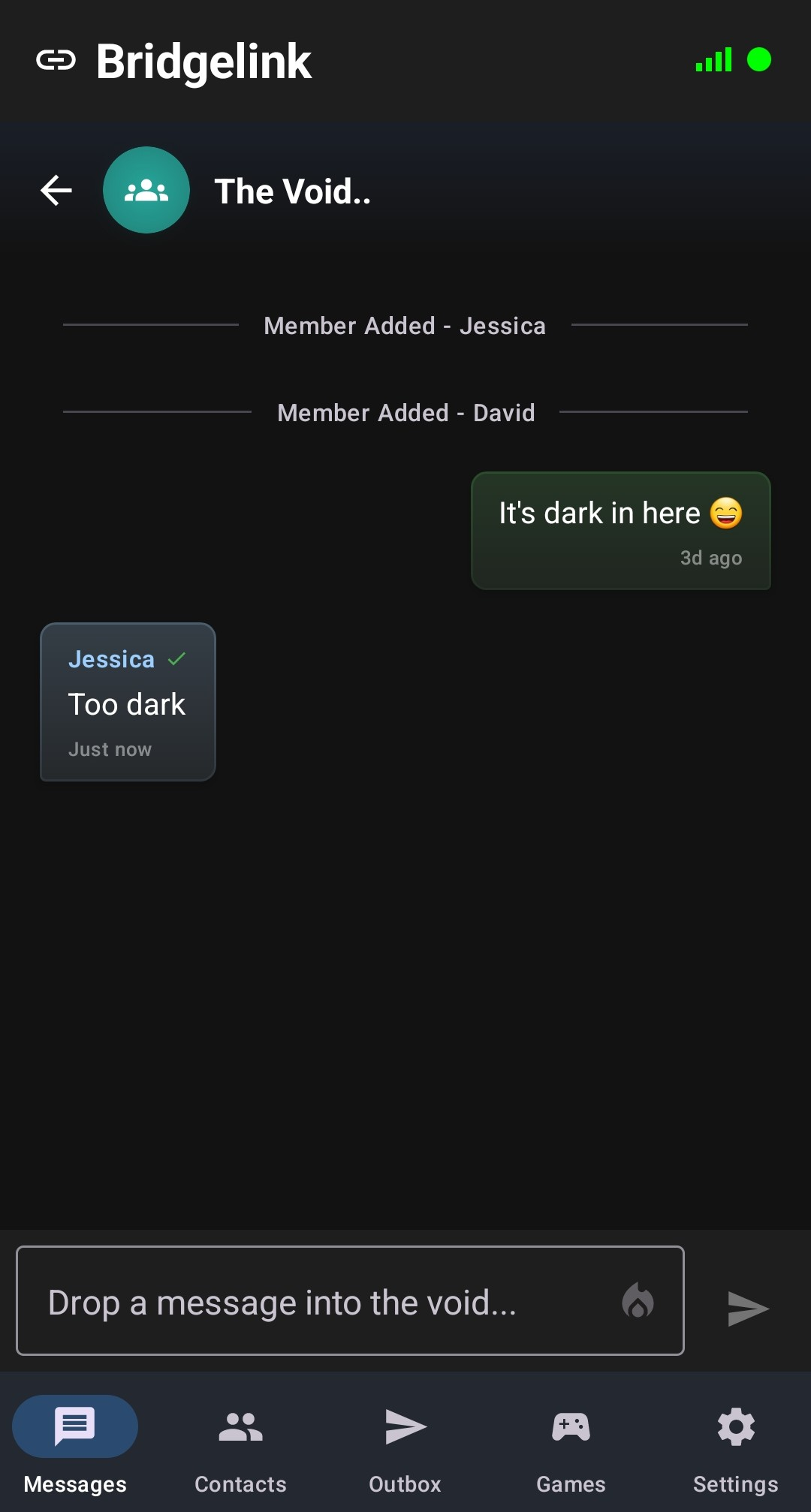
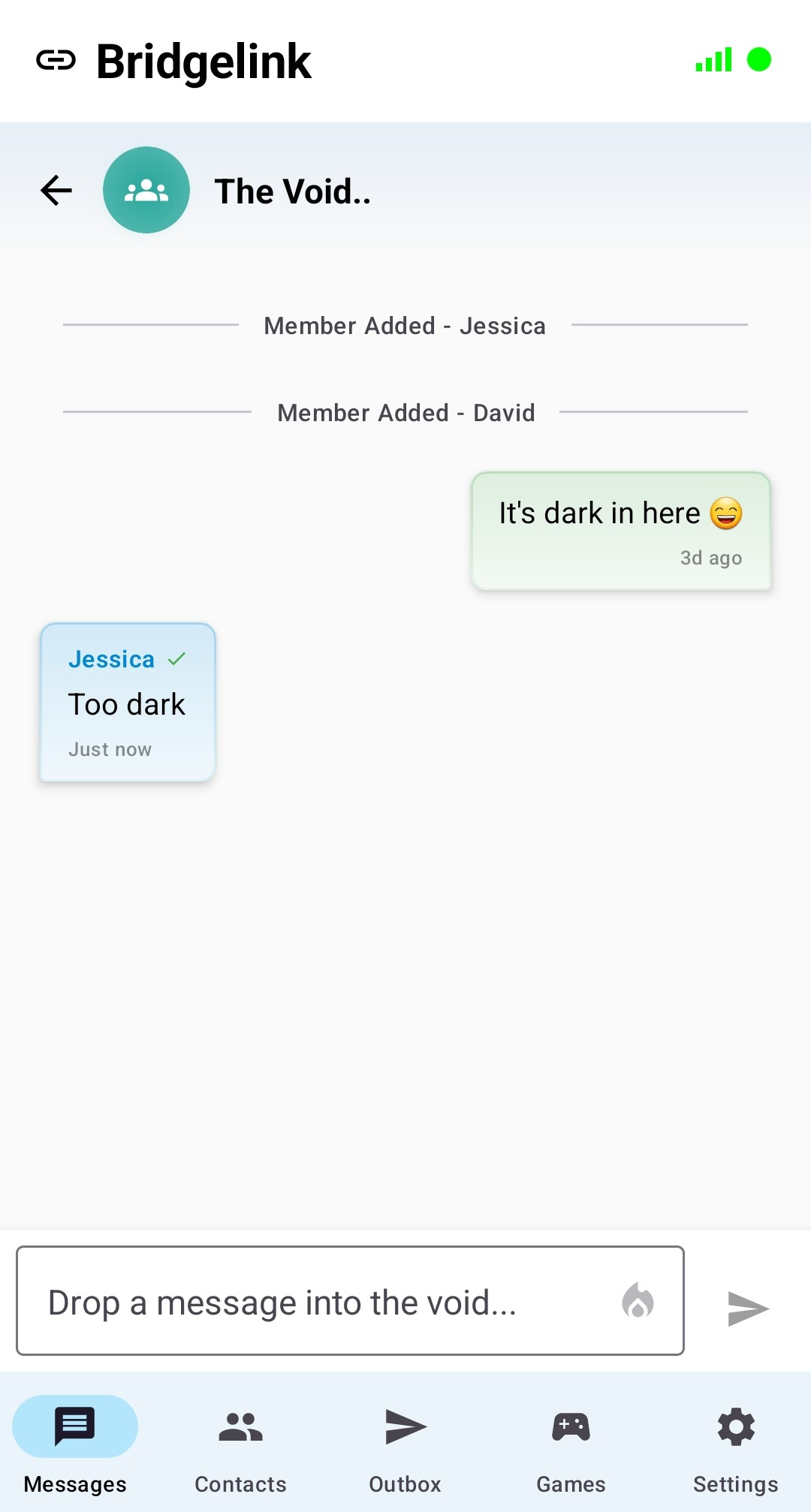
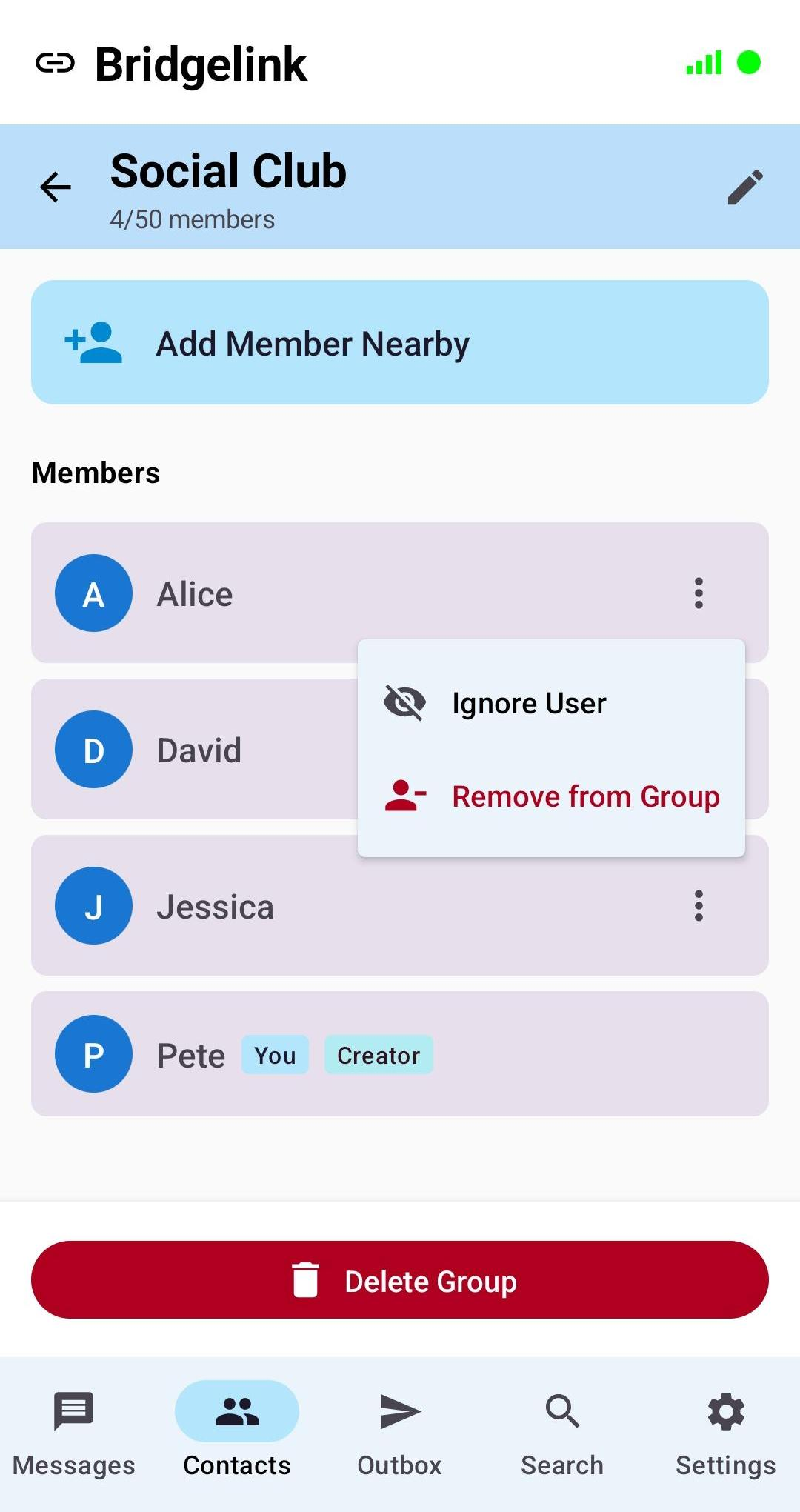
Create encrypted group conversations. Groups use their own key pair, and unknown senders appear anonymized until you add them as contacts ‐ encouraging real-world connections.
Turn your device into a mesh supernode. Hub mode forwards to 30 peers (vs 10 normal), stores 30MB of relay data, and can help relay messages to more nodes.
Be like a postman and carry messages for your contacts. Doubles storage capacity to 200 messages and prioritizes delivery to your contacts' recipients. Be a human relay node.
Protect the app with PIN, TOTP authenticator codes, or biometric unlock. Auto-lock on screen off, intruder photo capture, and screenshot blocking keep your messages safe.
Export encrypted backups protected with Argon2id + AES-256-GCM. Restore on a new device with your password and 32-character backup code. ICE contacts are automatically notified on restore.
Intelligent power management with AlarmManager-based scheduling. Wake locks reduced by 75%, running at approximately 1.2x normal battery drain with full mesh functionality.
Encrypted group conversations with a unique privacy model
Each group has its own EC key pair shared among members. Messages are encrypted using ECDH between the sender's private key and the group's public key, ensuring only group members can read content.
Messages from unknown contacts in a group appear as truncated IDs (e.g., "D4F2A9...F9G7B2") with an "Add to view messages" prompt. This creates a natural incentive to meet people in person before seeing their messages.
Group messages are delivered in the same way as normal messages. This means that messages can be sent direct if near or relay across the mesh if not. Messages may come in out of order due to the nature of how a decentralized mesh system works or may never arive at all.
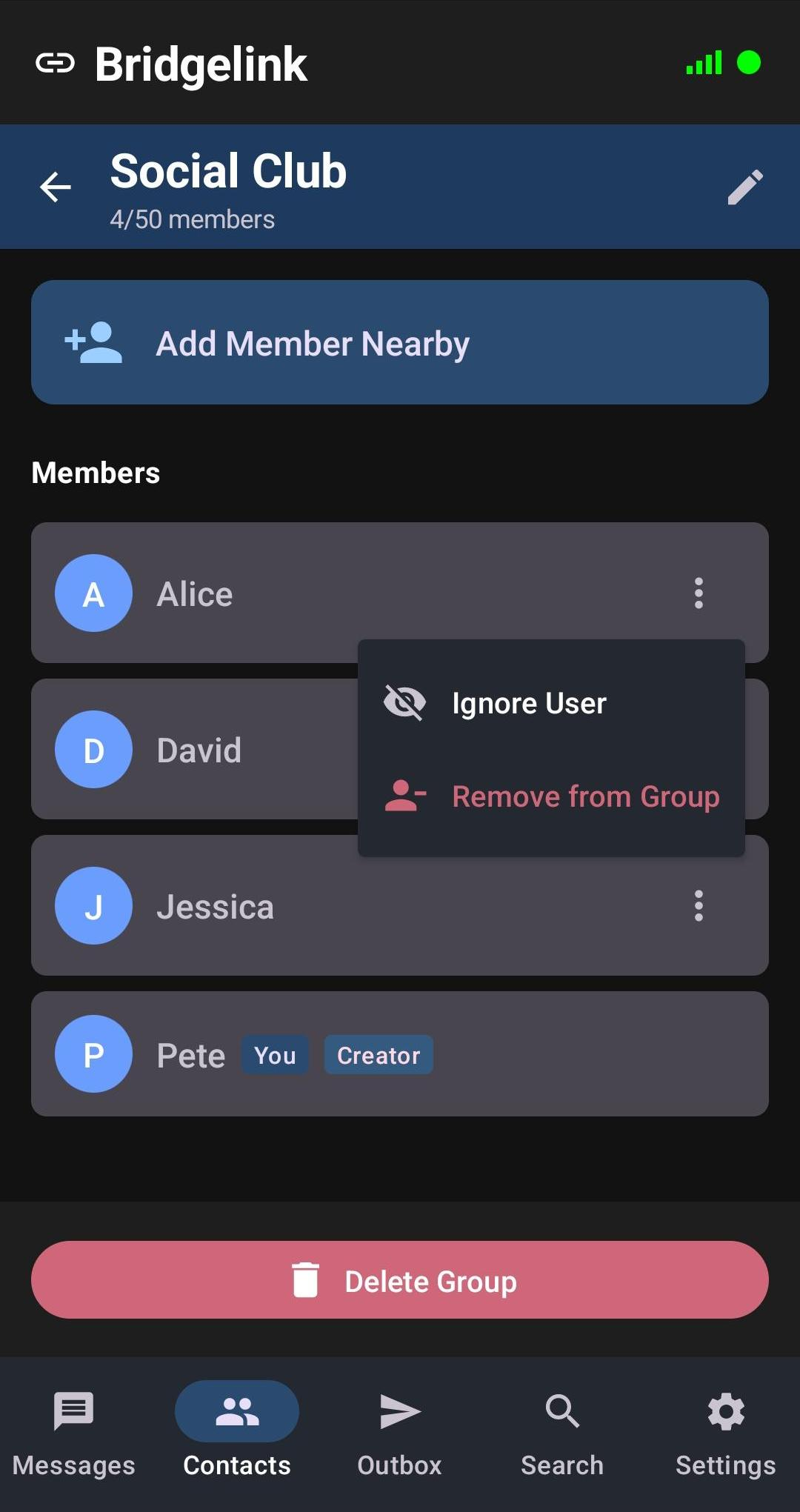
Two-tier system: Ignore (local, hide messages from specific members) and Remove (network-wide, creator only, propagated to all members for 7 days).
You can create a group yourself, or join someone elses group. Both methods require physical proximity with other members. This is so your devices can exchange private keys. You cannot join a group remotely.
Groups can have a maximum of 50 members. Messages sent to groups decay over time, For the first few hours it will attempt to send messages to everyone in the group. As hours and days pass the application will lower the threshold of number of members it has delivered messages to until it considers the message as delivered. This is one of the biggest drawbacks of a decentralized messaging system, there is no server inbetween tracking who got the message and who still needs it.
Extend the network and carry messages further
Transform your device into a mesh network supernode that actively helps messages reach their destinations.
Set your device to automatically become a relay hub during configured hours when plugged in to charge. Perfect for supporting the mesh while you sleep.
Be a human relay node. Carry messages for your contacts by physically traveling between locations. Ideal for bridging gaps in the mesh where people are far apart.
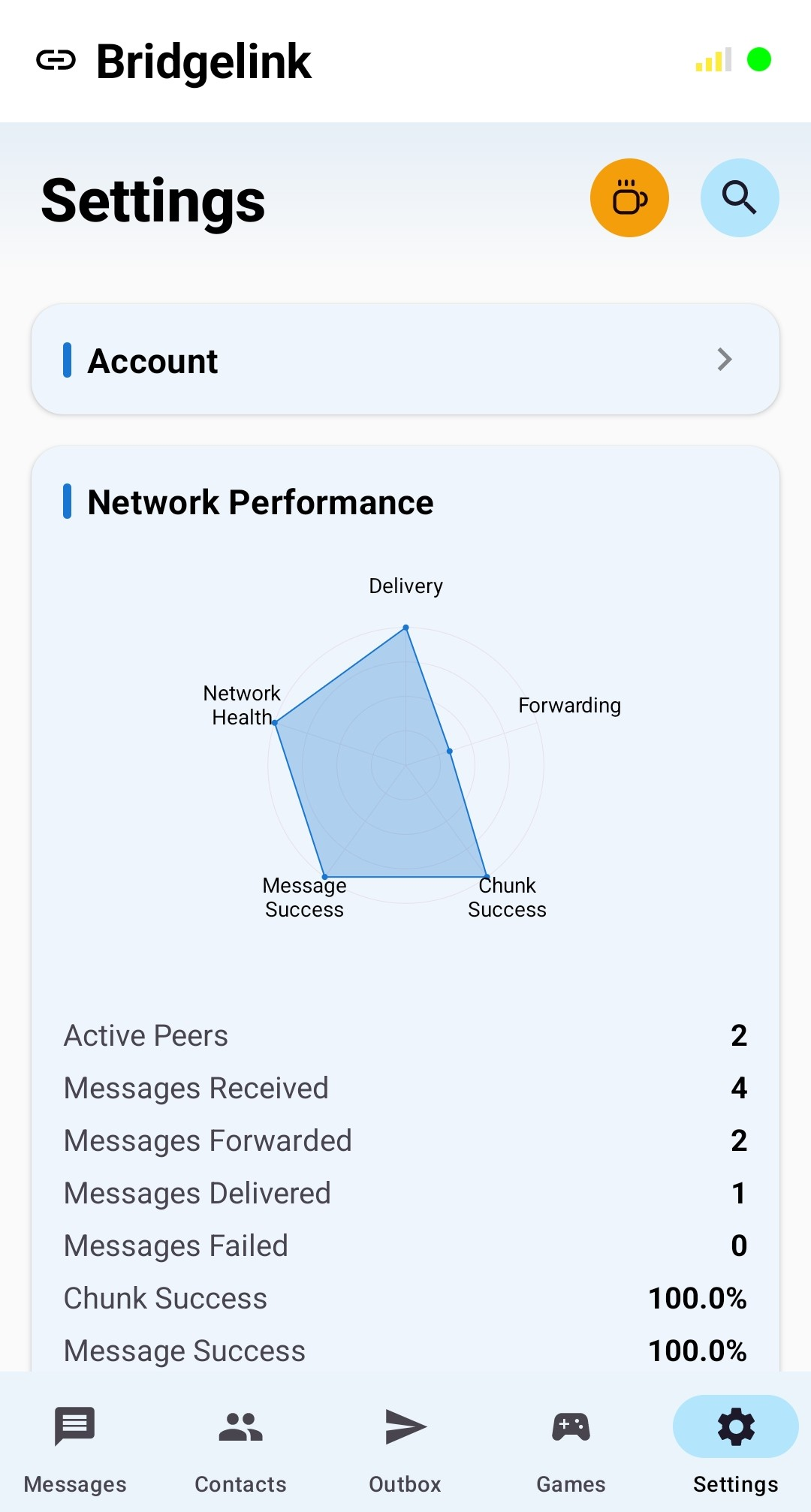
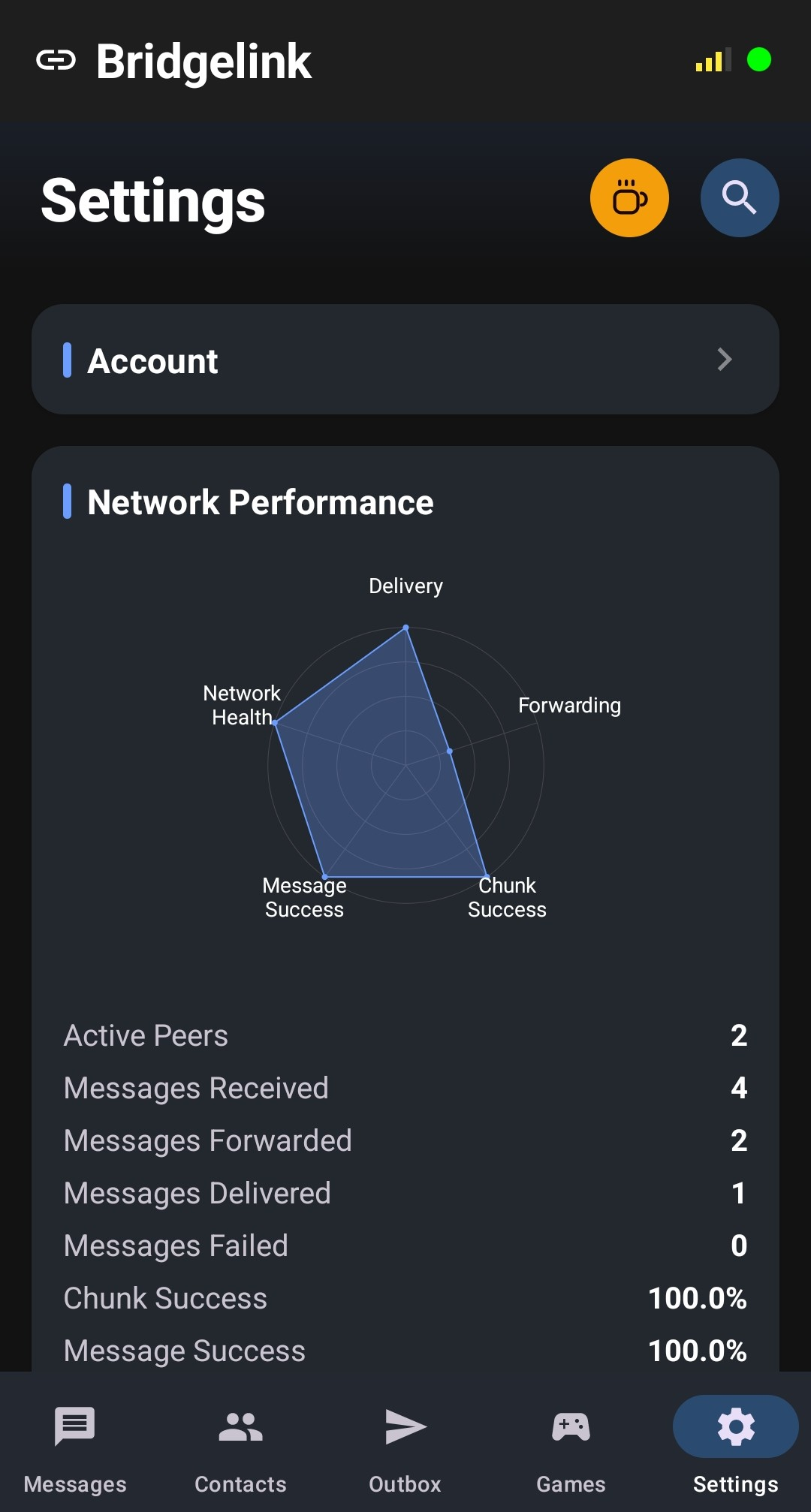
Bridgelink continuously monitors network health that measure peer count and connection staleness. Session health checks run every 90-300 seconds, with automatic teardown and rebuild if WiFi Aware enters a zombie state.